Brake components accumulate heavy grease, hydraulic fluid, brake dust, and road contamination that standard degreasers cannot fully address. You need a solvent formula designed specifically for metal brake parts — strong enough to strip bearing grease and brake fluid residue, fast-evaporating enough that no film remains when components are reassembled, and clean enough that it does not affect brake pad compound or rotor surfaces when used correctly.
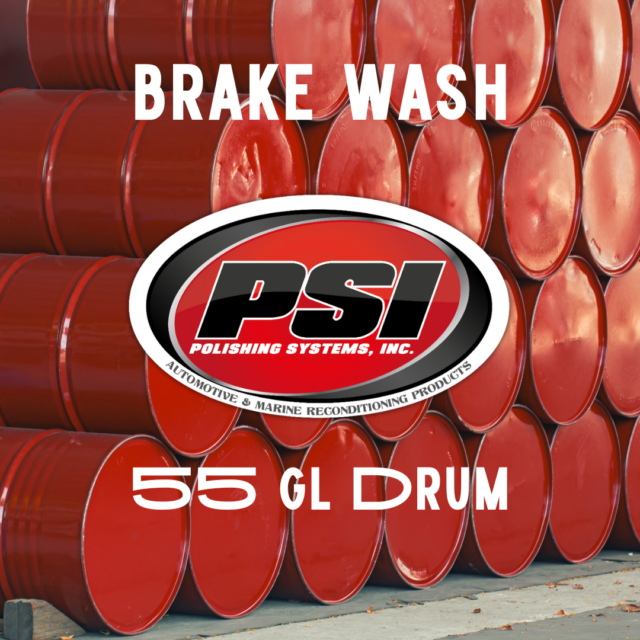
Brake Wash 55 Gallon Drum is the maximum-volume format for facilities where brake wash is a daily, high-volume consumable. A full 55-gallon drum supplies a busy multi-bay shop or fleet maintenance center for a month or more, depending on daily brake job count. Facilities at this volume typically run drum-pump dispensing systems that feed directly to workbench spray stations — eliminating individual container handling from the technician workflow.
What Brake Wash Is
Brake Wash is a fast-evaporating brake parts cleaner formulated to degrease rotors, calipers, drums, and metal brake components before inspection, service, or reassembly. It strips grease, oil, hydraulic fluid residue, and dust contamination from metal surfaces without leaving a residue film. It is a professional-grade solvent cleaner for shop floor use — not a wheel wash, not an all-purpose cleaner.
Key Features and Why They Matter
- Fast-evaporating solvent formula — flashes off metal surfaces quickly without residue. So what? Brake components can be inspected and reassembled immediately after cleaning without waiting for a product to dry or film out.
- Degreases brake fluid residue — removes the hydraulic fluid contamination that causes brake pad glazing and rotor surface issues.
- Metal-safe formula — appropriate for rotors, drums, calipers, and metal brake hardware. Does not attack metal brake components.
- Removes brake dust from hardware — strips accumulated dust and particulate from caliper slides, anchor pins, and bracket hardware during service.
- Multiple size options — available in working sizes from 1 gallon through 55-gallon drums for shops of every volume level.
What Brake Wash Is NOT For
Brake Wash is a brake parts cleaning solvent — it is not for use on painted wheel surfaces, plastic trim, rubber brake lines and hoses, or interior surfaces. It is not a wheel cleaner for removing iron fallout from wheel finishes. Do not use on rubber seals, silicone components, or any surface not rated for solvent contact. Brake Wash is flammable — use with adequate ventilation, away from ignition sources, and with appropriate PPE including chemical-resistant gloves and eye protection.
Who Uses This
National service chains, large fleet maintenance operations, dealership service departments processing high daily vehicle counts, and regional distribution operations supplying independent repair shops buy Brake Wash in full 55-gallon drum format. For operations that are still determining monthly consumption, the 30 Gallon Drum is a practical intermediate step. Browse shop supplies and exterior detailing products for drum pump accessories and complementary items.
How to Use Brake Wash
- Ensure the work area is ventilated and away from ignition sources.
- Remove the wheel if needed to access rotor and caliper surfaces.
- Apply Brake Wash by spray, brush, or dip to the target metal brake component.
- Allow the solvent to dissolve grease and contamination — 30–60 seconds for most applications.
- Wipe or rinse away dissolved contamination. For heavy buildup, use a parts brush during the dwell period.
- Allow to flash-evaporate completely before reassembly.
- Dispose of solvent-contaminated rags and fluid in approved waste containers.
Why Buy Brake Wash at Full-Drum Volume
The 55-gallon drum is the most economical buying format for Brake Wash. For facilities consuming 20+ gallons per month, drum pricing delivers the lowest per-job chemical cost and eliminates the frequent reorder cycle of pail format. Drum dispensing infrastructure (pump, bung adapter, dip tube) pays for itself quickly in reduced handling time and spill prevention.
Frequently Asked Questions
Will Brake Wash damage my brake pads?
Brake Wash should not be applied directly to brake pad friction material — it is intended for metal brake components only. Contact with brake pad compound can affect pad performance. Apply carefully to rotors, calipers, and metal hardware, and allow full evaporation before reinstalling pads.
Is Brake Wash safe on painted calipers?
Brake Wash is a strong solvent — it can affect painted, powder-coated, or anodized caliper finishes with prolonged contact. For decorative brake calipers, use targeted application and short dwell times on metal surfaces only, keeping the solvent off painted faces where possible.
Can I use Brake Wash on alloy wheels?
Brake Wash is a brake parts degreaser, not a wheel cleaner. For alloy wheel surfaces, use a pH-balanced wheel cleaner or iron decontaminant. Brake Wash’s solvent strength can affect wheel clear coats and painted finishes.
How is Brake Wash different from carburetor cleaner or general degreaser?
Brake Wash is formulated to flash off quickly from metal surfaces without leaving any oily or residue film — critical for brake components where any contamination can affect stopping performance. General degreasers and carb cleaners may leave residues that are not appropriate for brake system components.
Do I need to neutralize Brake Wash after application?
No — Brake Wash is designed to evaporate completely from metal surfaces without requiring neutralization or rinsing. Full evaporation should occur within a few minutes in normal shop conditions. Inspect the surface before reassembly to confirm it is dry.