
The difference between a corrected car and a show-quality corrected car is almost always in the last step. After compound and polish have done the heavy work, there is still a layer of fine micro-scratches introduced by the polishing stage — too light to be called defects, but visible under direct or raking light as a subtle haziness that keeps the paint from reaching its full depth and reflectivity. The jeweling step exists specifically to close those final marks. It is not a shortcut or optional detail — it is what separates professional-grade results from enthusiast-grade results.
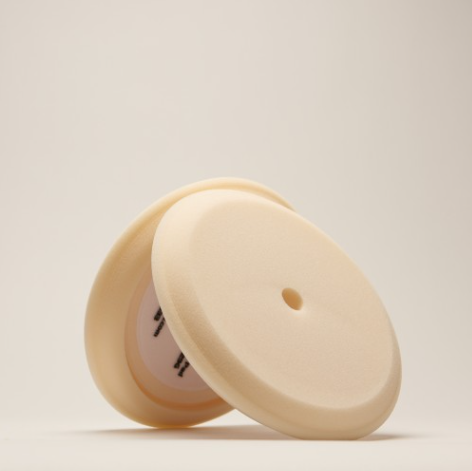
The 9″x1.5″ White Contour Foam Grip Pad is designed for that final jeweling step. Positioned as the softest finishing option in the 9-inch contour pad lineup, the white foam density delivers virtually zero abrasion — enough to work a finishing product into the surface and produce a wet, mirror-like gloss, without the risk of reintroducing any marks from the pad itself.
What This Pad Is
This is a 9-inch diameter, 1.5-inch thick ultra-soft white foam finishing pad with a contoured face and standard hook-and-loop backing. White in the professional foam pad color system indicates the softest density tier — used for finishing polish, paint glaze, and jeweling-compound passes immediately before protection application. The contoured face maintains contact across curved panel sections that flat-profile pads miss at the center point of body lines and transitions.
Key Features and Why They Matter
- Ultra-soft white foam at softest density tier — designed for zero additional marring risk. Works finishing product into the surface and polishes out any residual haze from the polish step, without adding a new scratch layer that would require another pass.
- 9-inch diameter — efficient coverage on large panels. Reduces total pass count on hoods, roofs, and trunk lids, which means less machine time and more consistent product distribution.
- Contoured face profile — follows body panel curvature and maintains even contact across transitions, edges, and curved surfaces where flat foam loses contact and leaves unworked paint.
- 1.5-inch foam depth — absorbs oscillation for smooth, vibration-reduced application. Particularly valuable on DA polishers at finishing step speeds where pad behavior directly affects surface clarity.
- Universal hook-and-loop backing — fits all standard professional polisher backing plates in 8-inch or 9-inch diameters.
What This Pad Is NOT For
The ultra-soft white finishing pad is not for compound work, heavy polish, or any step that requires meaningful abrasive cutting. Loading a cutting compound onto an ultra-soft pad and expecting defect removal is a waste of product and time — the foam will not generate the heat and pressure needed to activate cutting abrasives properly. Use the appropriate cutting or polishing pad for those steps, and reserve the white pad for the final jeweling or finishing pass only. Also not suitable as the first correction step on neglected, heavily oxidized, or scratch-marked paint.
Who Uses This Pad
Show-quality detailers, ceramic coating prep specialists, and correction shops where the final finish level is non-negotiable all use an ultra-soft finishing pad as the last mechanical step. Dealers and reconditioning shops that want to maximize perceived finish quality before retail lot delivery also use this step. For production shops doing volume correction work, pair this with the Black Contour Foam Finishing Pad and the Green Contour Foam Polishing Pad for a complete three-pad correction sequence.
How to Use
- Complete compound and polish steps — the white pad is always the last mechanical step before protection.
- Choose a finishing polish or paint glaze appropriate for the paint system and desired gloss level.
- Apply 4-5 small drops to the pad face and spread across the panel at low machine speed before working.
- Work at low-to-medium speed — DA: speed 2-3 of 6. Rotary: 800-1,000 RPM. Light pressure. The soft foam and finishing product need less heat than compound steps.
- Wipe with a clean plush microfiber and inspect under LED or direct sunlight before applying sealant or coating.
Why Buy This vs. Budget Finishing Pads
Budget finishing pads suffer from inconsistent foam density — harder and softer spots across the face create variable product delivery and leave visible light-and-dark areas on the corrected surface. For jeweling work, that inconsistency defeats the purpose of the step. The contoured face on this pad is also specifically designed for panel-following contact, not an afterthought. The full exterior pad and compound lineup at Polishing Systems Inc is built to work as a coordinated system across the correction sequence.
Frequently Asked Questions
What is the difference between the White and Black contour foam pads?
Both are ultra-soft finishing pads suitable for the final correction step. The White pad is positioned at the absolute softest density in the lineup — ideal for jeweling passes and show-quality finishing. The Black pad offers marginally more product delivery suited for general finishing-step production work. For most correction jobs, either performs well; for highest-gloss show work, the white is the preferred choice.
Can I use this pad for applying wax or sealant?
Ultra-soft foam pads can be used for wax and sealant application by hand or at very low machine speed, but a dedicated applicator pad or foam wax applicator is more efficient for protection-layer products. The contour pad is optimized for the final polish step, not for working in protection chemistry.
How many uses does one pad provide before replacement?
A well-maintained ultra-soft foam pad used exclusively for finishing steps (not compounding) typically lasts 20-40 sessions before foam cell degradation affects performance. Clean after each use, air dry completely, and inspect for compressed or hardened spots that indicate end of usable life.
Is this pad compatible with a one-step AIO compound?
Yes — AIO compounds (all-in-one compound, polish, and sealant) can be applied with an ultra-soft pad for a light enhancement pass on paint that is already in good condition. For paint with moderate defects, start with a cut pad and compound first, then follow with the AIO or finishing product on the white pad.
Does 9-inch mean I need a 9-inch backing plate?
Yes — match the backing plate to the pad diameter within approximately 1 inch. A 9-inch pad runs on an 8-inch or 9-inch backing plate. Running it on a significantly smaller backing plate causes pad flutter and uneven contact. Check your polisher’s available backing plate sizes before ordering.