
There are jobs where foam compound pads simply do not have enough cut. Deep 1500-grit sanding marks on a repaint, years of heavy oxidation on a neglected boat hull, or clear coat that has chalked well past the point where a medium-cut foam pad is going to touch it — these are the situations where wool compounding enters the workflow. Wool generates friction heat differently than foam, and that heat-abrasive combination is what delivers the rapid cutting speed a production shop needs to make heavy correction economical.
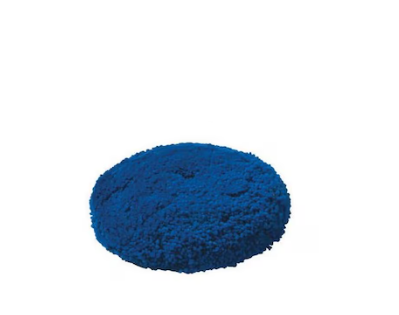
The 7.5″ x 1.5″ Blue Wool Compounding Grip Pad (SKU BS7503BG) from Polishing Systems Inc is a 4-ply, 100% natural wool pad built specifically for the heavy correction stage. The blue color designation indicates compounding-grade — this is not a polishing or finishing pad. It is the first pad in a multi-step correction sequence, designed to remove the most defects in the shortest time before you switch to polish and a softer pad to refine the finish.
What This Product Is
This is a 100% natural wool compounding pad, 7.5 inches in diameter and 1.5 inches deep, with a 4-ply wool construction and a grip (hook-and-loop) backing. The 4-ply build gives the pad sufficient body to maintain consistent face contact across a panel without collapsing under rotary pressure. Natural wool fiber is aggressive, heat-tolerant, and delivers high cut rates that diminish as the abrasive in the compound works down — the classic wool-compound workflow.
Key Features and Why They Matter
- 100% natural wool fiber — delivers the highest cut rate available in a buffing pad without the hazards of very aggressive synthetic options. Natural wool’s microscopic fiber structure generates friction and heat that accelerates compound abrasion against paint defects.
- 4-ply construction — provides structural rigidity under rotary pressure. The pad holds its face flat against the panel instead of distorting under load, which gives consistent cut across the full pad surface.
- 7.5-inch working diameter — covers significant panel area per pass. Larger than common 6-inch pads but still manageable on doors, hood sections, and curved body panels.
- Grip-backed — compatible with standard hook-and-loop backing plates. Secure attachment prevents pad throw-off at higher rotary speeds.
- Blue color coding — identifies this as a compounding-grade pad at a glance in a multi-pad setup. Reduces the risk of using the wrong pad density for the current correction stage.
What This Is NOT For
This is a compounding-only pad. Do not use it for the polishing or finishing stages — wool at this ply level will introduce swirl marks and holograms that require additional correction steps to remove. It is not suitable for use on delicate single-stage paints where heat buildup can cause burn-through. It is also not appropriate for DA (dual-action) orbital polishers — this pad is designed for rotary use. For DA applications, use a foam cutting pad instead. Always pair this pad with a heavy-cut compound matched to the severity of correction needed.
Who Uses This
Production body shops running rotary polishers on wet-sanded repaints use wool compounding pads as the standard first step. Auto reconditioning operations correcting heavily oxidized vehicles or marine gel coat use wool to remove the bulk of surface defects before switching to a foam polishing pad. Mobile detailers working on heavily neglected clear coat or paint-heavy commercial vehicles also keep a wool compounding pad in their kit for the jobs that foam simply cannot handle efficiently.
How to Use
- Mount: Attach the pad to a hook-and-loop backing plate sized for 7.5-inch pads on a rotary polisher.
- Prime the pad: Apply 3-4 dime-sized drops of heavy-cut compound to the pad face. Work into the pad at low speed before beginning correction passes.
- Set speed: Start at 1,200–1,500 RPM for initial compounding. Adjust based on paint type and defect severity — softer paints require lower speed to avoid heat damage.
- Work in sections: Work 18–24 inch sections at a time. Apply moderate downward pressure and work in overlapping straight passes, then cross-hatch passes.
- Check work: Inspect progress under a panel light frequently. Compound and refine until sanding marks are removed.
- Clean the pad: Use a pad spur or brush to remove compound residue from the wool fibers before the pad loads up. Clean pads cut better.
- Follow up: Transition to a foam polishing pad with medium polish to refine the finish left by the wool stage.
Why Buy This vs. a Cheap Import Wool Pad
Cheap imported wool pads often use blended or short-fiber wool that sheds during use, contaminating the paint surface with loose fibers, and compresses permanently after the first few uses — losing the structural rigidity that keeps the face flat. A quality 4-ply 100% natural wool pad maintains its cut rate over many uses when properly cleaned and stored. For a complete pad system, see the full range of polishing pads and backing plates at Polishing Systems Inc.
Frequently Asked Questions
Can I use this pad on a dual-action (DA) polisher?
This pad is designed for rotary polisher use. Wool pads on DA polishers do not generate the same friction heat and cutting action because DA polishers have a more controlled orbit. For DA use, choose a foam cutting pad with an appropriate heavy-cut compound instead. Rotary-specific pads used on DA polishers also risk backing plate size mismatches and uneven wear.
What compound should I pair with this pad?
Pair this wool compounding pad with a heavy-cut compound appropriate for the defect severity. For deep sanding marks and heavy oxidation, a body-shop-grade heavy compound is the correct pairing. For moderate oxidation, a medium-cut compound will still work effectively on a wool pad. Avoid light polishes on a wool compounding pad — the aggressiveness of the pad will not be productive at that polish level.
How do I clean a wool buffing pad?
Use a nylon pad spur or stiff brush during use to clear loaded compound from the wool fibers. After the job, rinse the pad thoroughly in warm water, work out residual compound by hand, and allow it to air-dry face-up. Never machine-dry wool pads with heat — it can mat and permanently compress the wool fibers.
How many correction passes does this pad last before it needs replacing?
A quality 4-ply wool pad, properly cleaned after every use, will last dozens of correction sessions before needing replacement. Wool pads that are not cleaned during use — allowed to load up with dried compound — degrade much faster. Replace when the fibers become matted flat or when you notice significantly reduced cut rate even on a freshly primed pad.
Is 7.5 inches the right size for most vehicles?
A 7.5-inch pad on a rotary polisher covers hoods, roofs, large door panels, and trunk lids efficiently. For tight areas — around door handles, body lines, and A-pillars — a smaller 5 or 6-inch pad is more controllable. Most production shops keep both sizes. The 5-inch blended wool pad is the companion smaller-size option for detail areas.