
The finishing pad is where a paint correction actually finishes. You can do everything right with the cutting compound and the polishing pass, and still hand a car back to a customer with haze and holograms visible if the final pad is wrong — too aggressive, too worn, or not matched to the finishing polish. The last step demands a pad that delivers gloss without adding any new defects to what you just corrected.
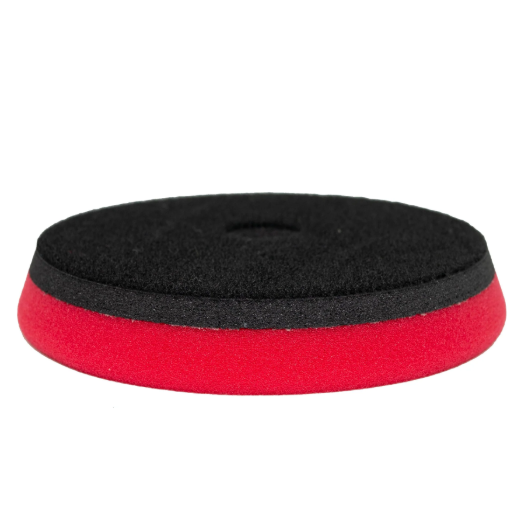
The 6″ Soft Red Finishing Foam Grip Pad from Polishing Systems Inc is built for that final step. Soft-density open-cell foam, red finishing-pad color designation, and a grip-back construction that works on machine polishers and by hand — giving detailers a consistent, versatile finishing pad for the last pass of every correction job.
What This Pad Is
A 6-inch soft-density foam buffing pad with a grip-back construction for machine polisher use, also suitable for hand application. Red color identifies it as a finishing-grade pad. Designed for use with finishing polishes and jeweling compounds in the final step of a multi-step paint correction process. Not a cutting or compound pad — it does not have the foam density to generate the heat and friction needed for aggressive defect removal.
Key Features and Why They Matter
- Soft foam density — the correct pad density for the finishing step. Soft foam conforms to paint surface contours, minimizes heat generation, and works the finishing polish without reintroducing swirls or holograms from pad pressure.
- Red finishing color designation — standard red indicates finishing-grade aggressiveness in the professional pad color spectrum. Detailers identify the pad in a multi-pad kit without having to read labels mid-session.
- 6-inch diameter — standard machine polisher pad size for 6-inch backing plates. Covers open panel sections efficiently at finishing speeds.
- Grip-back construction — bonds to hook-and-loop backing plates for machine use, and also provides grip for controlled hand-application of finishing polish on small sections or curves.
What This Pad Is NOT For
Not a cutting or compound pad — soft-density foam cannot generate the cutting action needed to remove deep defects, sanding marks, or heavy oxidation. Do not use this pad with heavy-cut compound; the soft foam will pack up with compound residue and deliver inconsistent results. For cutting steps, use a firm or medium-density pad. For the full pad and compound pairing system, see the compounds and polishes category.
Who Uses This
Professional paint correction detailers who run multi-step correction processes and need a reliable finishing pad for the final jeweling pass. Body shop refinishers who buff fresh clearcoat to a final gloss after cutting. Marine and RV detailers who do gel coat correction and finish to a final gloss standard. Mobile detailers who include paint correction in their service lineup. Enthusiasts who do their own multi-step paint correction and want a quality finishing pad for the final step.
How to Use
- Prime the pad: Apply 3-4 pea-sized drops of finishing polish to the pad face. Spread at low speed (1-2) across the work area before increasing to working speed.
- Work at finishing speed: Typically speed 3-4 on a DA polisher (2,000–3,000 OPM). Lower speed than the cutting pass — finishing steps need less heat and aggressiveness.
- Work in overlapping sections: Use 50% overlapping passes across the panel section. Light, even pressure — the pad should glide across the surface rather than pressing into it.
- Wipe and inspect: Wipe with a clean microfiber after each section and inspect under a paint light for any remaining haze or holograms before moving to the next section.
- Clean the pad: After each use, clean the pad with a pad conditioning brush or cold water rinse. Allow to dry flat before storing.
Why Buy a Purpose-Built Finishing Pad vs. Using a Cutting Pad at Low Speed
Running a cutting pad at low speed does not replicate the finishing performance of a soft-density finishing pad. Cutting pads have a stiffer foam structure that continues to generate mechanical agitation even at low speeds — which means you are adding micro-defects at the same time you are trying to remove them. Soft-density finishing foam is specifically engineered for gentle, gloss-producing action at the speeds and pressures used in the final step. For the full pad lineup from Polishing Systems Inc, see the exterior buffing pads and polishing accessories.
Frequently Asked Questions
What finishing polish should I pair with this pad?
Any quality finishing polish or jeweling compound matched to the paint system you are working on. For most modern automotive clear coats, a non-diminishing finishing polish delivers the best results on a soft foam pad. Test on a small section first if you are uncertain whether the polish/pad combination produces the gloss level you need before committing to a full panel pass.
Can this pad remove light swirl marks by itself?
The soft red finishing pad with an appropriate finishing polish can address very light swirls and fine haze — the kind left by a previous polishing pass. It is not designed for heavy swirl removal or deep scratch correction. For those defects, start with a firmer pad and appropriate compound, then finish with this pad.
How many paint correction sessions can I get per pad?
With proper washing and pad care between sessions, a quality foam finishing pad typically lasts 15-25 correction passes before the foam cell structure deteriorates enough to affect performance. Wash pads after every use, allow to dry fully, and inspect for compressed or torn foam before reusing.
Is this pad compatible with rotary polishers as well as DA polishers?
Yes — the grip-back construction connects to standard rotary backing plates. On a rotary, use the lowest practical finishing speed and maintain pad movement to avoid heat buildup. Soft-density pads are more forgiving on a DA than a rotary for finishing work; on a rotary, extra attention to pad temperature is important.
Should I use a pad conditioning spray on this pad during use?
Pad conditioning spray (a light mist of water or dedicated pad lubricant) extends polish working time and prevents pad loading on finishing steps. A light mist between passes on a finishing foam pad is common practice and helps maintain consistent product distribution across the pad face.