
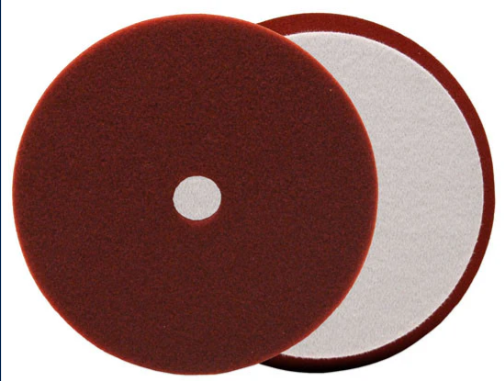
Getting the right result at the polishing stage depends as much on pad selection as compound choice. A pad that is too aggressive creates holograms and marring that requires additional correction steps. A pad that is too soft will not move enough abrasive to actually cut the defects you are trying to remove. The maroon medium-cut foam pad sits in the productive middle — it removes real defects efficiently without introducing new ones that require rework.
The 6-inch Maroon Polishing Foam Grip Pad from Polishing Systems Inc is the medium-cut option for shops and detailers who work with one or two passes per vehicle. It is designed for DA and rotary polisher use with medium to light-cut compounds and polishes, making it the daily workhorse pad for the majority of paint correction jobs that do not need heavy-cut cutting disc treatment.
What This Pad Is
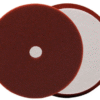
This is a 6-inch diameter, maroon-colored, medium-density open-cell foam buffing pad with a grip-face surface treatment. The maroon color is the industry-standard color code for medium-cut foam pads. The grip face increases compound retention on the pad surface, which reduces product flinging and waste during machine polishing. The 6-inch diameter is the standard size for 5 to 6-inch backing plates used on most mid-size dual-action and rotary polishers.
Key Features and Why They Matter
- Medium-density foam construction — provides enough cutting action to remove swirls, light scratches, and light oxidation in one or two machine passes. So what? It is the most versatile foam density for the range of paint conditions a working detailer encounters daily.
- Maroon color coding — instantly identifies the pad’s cut level in a multi-pad setup. Prevents accidentally using a finishing pad where a cutting pad is needed, or vice versa.
- Grip-face surface — the textured face holds compound and polish between the pad and paint surface, reducing product migration to the pad edges. More product stays working, less spins off.
- 6-inch working diameter — fits 5.5-inch and 6-inch backing plates. The 6-inch size provides the working area-to-speed ratio that most professional detailers prefer for panel-by-panel correction work.
- Compatible with DA and rotary polishers — works on both random orbital (DA) and direct-drive rotary machines. The foam density is appropriate for the higher heat of rotary polishers with medium compounds.
What This Pad Is NOT For
The maroon medium-cut pad is not for final polishing or jeweling steps. For final gloss enhancement and fine swirl removal, use a white or black finishing foam pad. It is also not designed for heavy-cut compounding on severely oxidized paint or deep scratch removal — for those applications, use a yellow or orange heavy-cut foam pad or a microfiber cutting disc. Do not use this pad with rubbing compounds on thin or single-stage paint without test panels first.
Who Uses This Pad
The 6-inch maroon medium-cut pad is used by professional detailers doing light to moderate paint correction on modern clear-coated vehicles. It is a production pad for shops that do one-step paint enhancement on trade-ins and dealer prep vehicles, and for detailers doing single-pass correction on customer vehicles in good paint condition. DIY enthusiasts with a mid-size DA polisher will find this the most practical entry point for machine polishing — it is forgiving enough to learn on and effective enough to produce real results.
How to Use
- Prime the pad: Apply 4–5 pea-sized dots of medium-cut polish or compound to the face of the pad before first use on a new pad. Spread by hand before running the machine.
- Set machine speed: Start at 3–4 on a DA (600–800 OPM) or 1200–1500 RPM on a rotary. Increase speed once the product is spread across the work surface.
- Work in 2×2 foot sections: Slow, overlapping passes. Keep the pad flat to the surface — pad tilting reduces effective cutting area.
- Apply 3–4 passes per section: Check the finish after 3 passes. Medium compound on maroon pad should show visible correction in 2–3 passes on light defects.
- Clean the pad frequently: Use a pad brush or compressed air to remove compound buildup every 1–2 panels. A loaded pad cuts less effectively and can glaze over.
- Follow with a finishing step: Remove medium polish residue, inspect the finish, and follow with a finishing pad and fine polish if a deeper gloss is needed.
Why Buy This Pad vs. a Budget Import Foam Pad
Budget foam pads vary significantly in cell structure consistency, foam density calibration, and Velcro backing durability. Inconsistent foam density means inconsistent cutting action — sections of the pad may cut more aggressively than others, creating uneven results that require additional correction. This professional-grade pad uses consistent foam cell structure that delivers predictable medium-cut performance across the full pad face. The Velcro backing is also rated for repeated machine polishing cycles and pad washing, whereas cheap import pads frequently delaminate after a few wash cycles.
Frequently Asked Questions
What polish or compound works best with the maroon medium-cut pad?
Medium-cut compounds or one-step polishes are the best match for the maroon foam pad. Pairing it with a heavy cutting compound may produce too much cut on modern clear coats. Pairing it with a finishing polish will produce less correction than the pad is capable of — save the finishing polish for a white or black soft-foam finishing pad.
Can I use this pad on single-stage paint?
Use caution on single-stage paint. Medium-cut pads with medium compounds can cut through single-stage paint more aggressively than expected. Always test on a hidden panel first, use lower machine speeds, and inspect the finish after every 1–2 passes on single-stage vehicles.
How do I clean and store foam polishing pads?
Rinse with clean water and work out compound residue with your fingers or a pad cleaning brush. Allow to air-dry face-up — never store foam pads with compound trapped in the foam. A pad conditioner spray can be used to restore suppleness to dried foam pads between uses.
How many vehicles can I detail with one maroon pad before replacing it?
With proper cleaning after each use, a quality foam pad should last 20–40 machine polishing sessions before the foam begins to break down or the Velcro backing loses grip. Replace pads when you notice glazing (the foam becomes slick and stops cutting), tearing at the edges, or Velcro separation.
Is this pad compatible with all dual-action polishers?
This 6-inch pad is compatible with all DA polishers using a 5-inch or 5.5-inch Velcro backing plate — including Rupes LHR 15/21, Flex XCE 10/150, Griots G15/G21, and Porter-Cable 7424XP. Use a 6-inch backing plate for optimal pad-to-machine fit at 6 inches.