
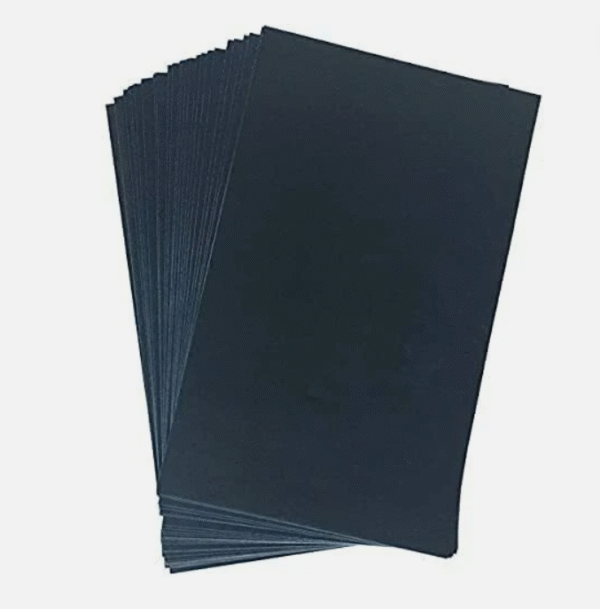
Wet sanding is precision work. You are mechanically removing paint from a vehicle’s surface — cutting down orange peel, leveling a dust nib, smoothing a sanding scratch, or flattening an over-sprayed panel before compound correction. The tools that work are precise, consistent, and matched to the defect depth you are addressing. The sandpaper that delivers those results is waterproof silicon carbide on a flexible backing that cuts cleanly, loads slowly, and provides the feedback a skilled technician needs to control the cut.
These are 5-1/2 by 9-inch waterproof silicon carbide sandpaper half sheets in a 50-sheet pack — the professional supply format for body shops, paint shops, and detailers who wet-sand regularly. Half sheets fit standard sanding blocks and dual-action sanding pads directly without cutting, making them the practical working format for most automotive wet-sanding applications.
What 2000-Grit Waterproof Half Sheets Are
2000-grit is the standard finish-sanding grit in most automotive wet-sand and compound correction sequences. It removes 1500-grit sanding scratches and provides a finer preparation surface before machine compounding — the standard intermediate step in a two-stage wet-sand preparation. Used alone, 2000-grit sands out minor orange peel and light surface imperfections on cured clear coat without requiring the deeper material removal of coarser grits. The sanding scratches left by 2000-grit are efficiently removed by a medium-cut compound and a machine polisher.
Key Features and Why They Matter
- 2000-grit silicon carbide abrasive — the standard finish-sanding grit for automotive clear coat leveling before compounding. Refines 1500-grit scratches and levels minor surface texture without the deep material removal of coarser grits.
- 5-1/2 x 9-inch half sheet format — direct fit for standard automotive sanding blocks. No cutting required. Professional working format for most body shop and detailing wet-sand applications.
- Waterproof backing — remains flexible and intact under continuous water lubrication. Essential for wet sanding where the paper must endure extended water contact without delaminating.
- 50-sheet professional pack — sufficient supply for a full production shop’s wet-sanding workflow without constant restocking. Per-sheet cost appropriate for regular production use.
- Silicon carbide chemistry — sharper, more consistent cut than aluminum oxide in wet automotive paint sanding. Loads slowly, providing consistent surface preparation feedback across each sheet’s service life.
What 2000-Grit Is NOT For
2000-grit cannot efficiently remove deep orange peel, coarse sanding marks (600-1000 grit), or significant paint surface defects — those require starting with 800 or 1500-grit. Not appropriate for use on freshly sprayed paint that has not fully cured. Do not dry-sand with waterproof paper. For surfaces needing only fine refinement before polishing (already at 1500-grit), move to 2000-grit as the refining step; for rough surfaces, start at the appropriate coarser grit.
Who Uses 2000-Grit Half Sheets
Body shops doing standard paint leveling before compounding on freshly painted panels. Detailers correcting factory orange peel on new vehicles or fresh paint. Paint shops doing final surface preparation before polish and clear coat in refinish workflows. Professional paint correction technicians wet sanding heavily oxidized or texture-issue clear coat as a correction step.
How to Use 2000-Grit Waterproof Half Sheets
- Prep the surface: Wash and clay the panel. Surface should be clean and free of contamination before sanding begins.
- Use after 1500-grit (if applicable): In a two-step sequence, use 1500-grit first to level orange peel, then refine with 2000-grit before compounding.
- Keep wet: Apply water or water-and-soap solution generously. Replenish as the surface dries — never sand dry.
- Use a sanding block: Use a rigid rubber block for flat areas; a flexible block for curves. Mount the half sheet directly onto the block without trimming.
- Inspect the scratch pattern: Rinse and dry after sanding. Examine under a panel light for uniform 2000-grit scratch coverage before compounding.
- Compound and polish: Machine compound removes 2000-grit scratches; follow with medium polish and finishing polish for final gloss.
Why Buy Professional Half Sheets vs. Hardware-Store Sandpaper
Consumer sandpaper is not graded to the tolerances required for automotive wet sanding — inconsistent grit sizing leaves uneven scratch depths that compound correction cannot completely remove without over-compounding. Professional automotive wet-sand paper uses tightly toleranced silicon carbide for consistent results. See the 3000-grit half sheet pack for the fine-refining step after 2000-grit, and the 1500-grit pack for the coarser step before 2000-grit.
Frequently Asked Questions
Should I use 1500 or 2000 grit for removing orange peel from factory clear coat?
It depends on the severity of the orange peel. Light factory orange peel on modern thin clear coat often responds to 2000-grit alone. Heavier orange peel, particularly on older vehicles or heavily textured spray, typically requires starting with 1500-grit to level the texture, then refining with 2000-grit before compounding. Always start with the finest grit that will achieve the result in a reasonable number of passes — going coarser than necessary creates more work in the compounding step.
What is the correct wet-sanding technique for automotive paint?
Keep the surface wet throughout the sanding process — water lubricates the cut and prevents the paper from loading with paint dust. Work in straight, overlapping passes in one direction, then cross-hatch perpendicular to check coverage. Use a hard backing block for flat panel areas; a soft or radius block for gentle curves. Change paper frequently — a loaded sheet cuts less consistently than a fresh one.
What compound is used after wet sanding?
After wet sanding, the next step is machine compounding to remove sanding scratches left by the final grit used. The compound grade should be matched to the grit — after 2000-grit sanding, a medium-cut compound is typically sufficient; after 600 or 800-grit, a heavy-cut compound is needed first, followed by medium polish, then finishing polish. The complete correction sequence is: sand to the appropriate grit, compound out the sand scratches, polish to remove compound haze, finish to gloss.
What is the difference between silicon carbide and aluminum oxide sandpaper?
Silicon carbide (the abrasive in these waterproof sheets) is a harder, sharper abrasive grain that cuts more precisely and loads more slowly in wet sanding applications. It is the correct abrasive for automotive paint wet sanding. Aluminum oxide is a harder, more durable abrasive appropriate for dry sanding wood and metal but is not optimized for the wet paint sanding workflow. For automotive refinish and detail wet sanding, silicon carbide waterproof paper is the professional standard.
How many sheets does it take to sand a full vehicle?
Sheet usage depends on vehicle size, paint condition, and how aggressively each sheet is used before replacement. As a general reference, a skilled technician doing a full wet-sand correction on a standard passenger car will use 10–20 sheets in a typical session. The 50-pack provides multiple full sessions or supply for several vehicles.