
Fender wells and wheel arches accumulate the worst contamination on any vehicle — compressed road debris, brake dust buildup, and seasonal mud that packs into the arch lip and the inner fender liner. A standard wash mitt cannot reach those areas. A detail brush is too small to work efficiently across a full fender well. The correct tool is a purpose-built fender brush — long enough to reach the full arch, bristled firmly enough to agitate the embedded contamination, and sized to cover the area in a practical number of strokes.
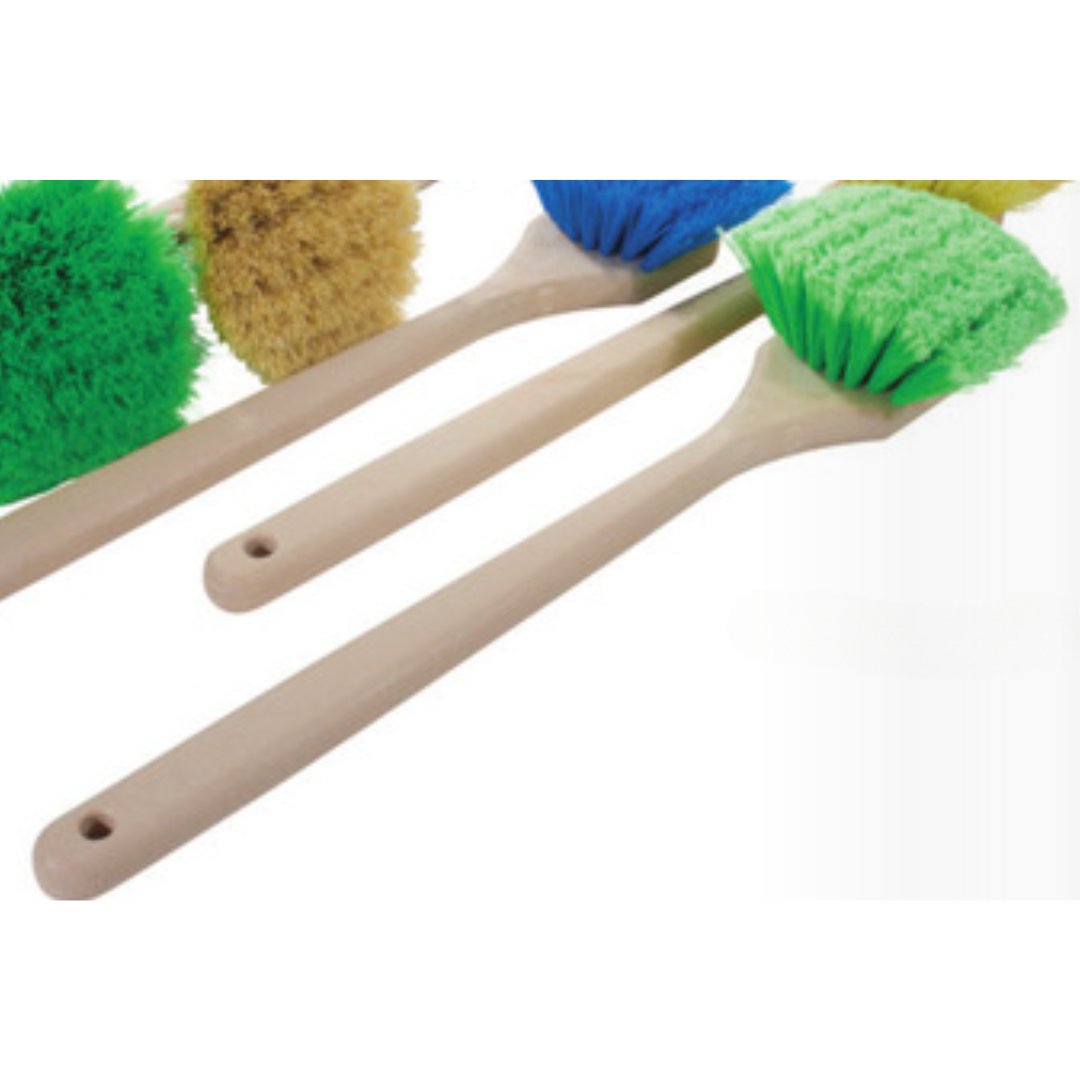
The 20″ Fender Brush — Green Flagged Nylex from Polishing Systems Inc is built for that job. At 20 inches, the brush covers the full fender well in 2-3 strokes. The green flagged Nylex synthetic bristles provide the combination of agitation and surface gentleness appropriate for the coated plastic and rubber surfaces of modern wheel arches. This is the brush that belongs at every detail bay and on every mobile detail truck for the fender well and wheel arch step.
What This Brush Is
A 20-inch wide professional wash and agitation brush with flagged Nylex synthetic bristles. “Flagged” refers to the split-tip construction on each bristle fiber — the split tip distributes product, improves surface coverage, and reduces the scratch risk of the bristle tip on surfaces compared to a cut (unflagged) bristle. Nylex is a synthetic bristle material that holds its performance when wet, resists chemical degradation from wheel cleaners and degreasers, and maintains its shape through regular use and washing. The green bristle color identifies this brush in a multi-brush washing kit.
Key Features and Why They Matter
- 20-inch working width — covers fender wells, large wheel arches, and substantial exterior panel areas in fewer passes. Significantly faster than small detail brushes for arch cleaning.
- Green flagged Nylex synthetic bristles — the flagged tip provides product distribution and agitation with reduced scratch risk. Nylex holds shape and chemical resistance through repeated wheel cleaner and degreaser exposure.
- Firm bristle calibration for arch work — stiff enough to agitate packed road grime and brake dust contamination in fender wells; appropriate for the coated plastic liners and rubber surfaces of modern wheel arches.
- Color-coded green bristle — allows wheel and arch brushes to be kept distinct from body-paint-safe brushes in a professional washing kit. Green = arch and undercarriage; other colors for upper paint.
- Durable handle construction — handles regular washing, chemical exposure, and physical use in a professional wash workflow.
What This Is NOT For
This brush is not appropriate for automotive clear-coated painted surfaces — the bristle stiffness calibrated for fender well agitation is too firm for clear coat contact. Use a soft wash mitt or foam applicator for painted body panels. Do not use the same brush interchangeably between wheel arch work and upper paint washing — brush color-coding exists to prevent this cross-contamination. Not for polished aluminum or chrome without appropriate product and technique for those surfaces.
Who Uses This Brush
Detail shops that include fender well and wheel arch cleaning as part of a complete exterior detail service. Mobile detailers who need the right tool for the arch cleaning step without improvising with a mitt or a small brush. Fleet wash operations cleaning commercial vehicles where wheel arch soil accumulation is significant. Serious enthusiasts who do thorough full-vehicle washing including the areas that most people skip. For the companion version of this brush with salt-and-pepper flagged bristle, see the 20″ Fender Brush Salt & Pepper.
How to Use
- Pre-rinse the fender well and wheel arch with high-pressure water to remove loose debris before brushing.
- Apply wheel cleaner or all-purpose degreaser to the arch area or to the brush head for agitation.
- Work the brush across the fender well with sweeping passes, covering the inner liner, the arch lip, and the structural areas of the wheel housing.
- Rinse thoroughly after agitation to flush loosened contamination from the arch.
- Rinse the brush immediately after use — brake dust and road grime that dries in the bristles reduces performance on the next use and can cause contamination issues.
Why Buy a Dedicated Fender Brush vs. Using a Wash Mitt
A wash mitt in a fender well contaminates the mitt with the worst surface on the vehicle — brake dust, road tar, packed grime — and then that contaminated mitt goes onto your hood and door panels. Keeping a dedicated brush for arch and wheel work is fundamental contamination management. The 20-inch format also covers the arch area in far fewer strokes than improvising with a small brush, making the arch cleaning step practical to include in every full exterior detail rather than skipping it for time. Browse the exterior wash brushes and accessories for the full range.
Frequently Asked Questions
What is the difference between the green Nylex brush and the salt & pepper version?
The primary difference is bristle material and color designation. The green Nylex brush uses flagged Nylex synthetic bristles in green. The salt-and-pepper version uses a different bristle blend (mixed color) that may have a different stiffness or texture profile for slightly different agitation characteristics. Both are 20-inch fender brushes — the choice often comes down to personal preference for bristle feel or shop preference for color-coded kit management.
Is Nylex bristle safe on plastic inner fender liners?
Yes — flagged Nylex is appropriate for the plastic, rubber-lined, or fiber-composite inner fender liners on modern vehicles when used with appropriate product as lubrication (not dry). The bristle stiffness is calibrated to agitate contamination without causing structural damage to the liner material under normal use pressure.
Can this brush be used on RV wheel wells?
Yes — the 20-inch width and firm bristle construction are well suited for RV wheel wells, which are typically larger and more heavily soiled than passenger vehicle arches. RV wheel well cleaning is one of the applications where the 20-inch format proves its efficiency advantage over smaller brushes.
How do I keep the bristles from permanently bending over time?
After use, rinse the brush thoroughly and allow it to dry bristle-up or hanging rather than resting on the bristle head. Storing a wet brush face-down compresses and permanently bends the bristles over time. With proper care and drying after each use, quality synthetic bristle maintains its original shape through many use cycles.