
Water spots on automotive glass from hard water exposure, mineral deposits on chrome trim, and light overspray on glass panels — these are recurring detailing problems that neither standard window cleaner nor conventional polishing addresses efficiently. Steel wool at the right grade has been used for decades in professional detailing and auto glass work for exactly this category of contamination: it cuts fine mineral and silica-based deposits without scratching properly-prepped glass.
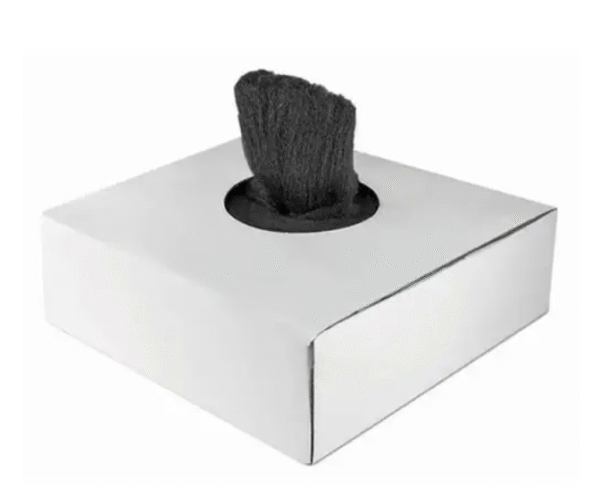
The 00 Steel Wool Roll from Polishing Systems Inc is the working-supply format for shops and technicians who use fine-grade steel wool regularly for glass restoration, chrome cleaning, and surface prep work.
What This Steel Wool Roll Is
This is a continuous roll of grade 00 (double-zero) steel wool — a fine grade positioned between the very fine 0000 (used for finishing and polishing applications) and the medium 0 grade (used for more aggressive surface prep). Grade 00 is commonly used for glass work, removing hard water deposits and mineral buildup from automotive glass, and light surface prep on chrome and stainless trim. The roll format allows you to tear off the exact amount needed for each job.
Key Features and Why They Matter
- Grade 00 fine steel wool — the appropriate grade for glass water spot removal and light chrome cleaning. Coarse enough to cut mineral deposits effectively; fine enough that it does not scratch properly lubricated automotive glass when used correctly.
- Continuous roll format — tear off the exact pad size needed for the job. Minimizes waste compared to pre-cut pads and allows custom sizing for different glass panels and trim pieces.
- Working roll size — the $29.95 roll format is the supply volume for shops doing glass restoration work regularly, not a single-use retail size.
- Versatile for glass, chrome, and stainless — one grade handles the range of light mineral-deposit removal tasks on automotive glass, chrome trim, and stainless steel surfaces.
What 00 Steel Wool Is NOT For and Critical Safety Notes
Never use steel wool on painted surfaces — steel wool will scratch automotive paint and clear coat. Always test on a small inconspicuous area of glass before full use, especially on vehicles with hydrophobic glass coatings or factory tinting. Do not use on tinted glass without confirming compatibility — some window films can be damaged by steel wool contact. Do not use dry on glass without a lubricant — always use with glass cleaner, water, or a dedicated glass lubricant to prevent scratching. Do not use on chrome-plated plastic or soft-chrome trim where the base material is fragile. Keep away from sparks and flame — steel wool is a fire hazard when fine grades are exposed to ignition sources. Store in a dry location to prevent oxidation of the wool before use.
Who Uses 00 Steel Wool
Auto glass restoration technicians removing hard water etching and mineral deposits from vehicle glass. Detail shops offering glass restoration as a service item. Body shops removing glass overspray after paint work. RV and boat glass restoration. Chrome and stainless trim cleaning where mineral deposits have built up. Any professional application where fine mechanical abrasion with a lubricant is the appropriate method for mineral deposit removal.
How to Use 00 Steel Wool for Glass Work
- Prepare the glass: Clean the glass thoroughly with standard glass cleaner to remove loose contamination before steel wool work.
- Apply lubricant: Apply a generous amount of glass cleaner or water to the glass surface. Never use steel wool dry on glass.
- Tear a working pad: Tear a pad-size section from the roll. Ball lightly to create a comfortable working surface without a hard fold edge.
- Work in small circles: Use light to moderate pressure in circular or overlapping linear strokes on the lubricated glass. Check progress frequently.
- Rinse and inspect: Rinse the glass clean and inspect the treated area in direct lighting. Repeat if mineral deposits remain.
- Follow with glass polish: For severe mineral etching, follow steel wool treatment with a glass polishing compound and a wool or foam pad for a final clear result.
Why Buy This vs. a Window Cleaning Spray Alone
Standard glass cleaners and even dedicated glass polishes cannot mechanically remove mineral deposits bonded to glass in the way that light mechanical abrasion can. Professional glass restoration work uses steel wool as the mechanical cutting step, followed by a glass cleaner or polish to remove residue and restore clarity. The combination achieves results that chemical-only cleaning cannot match on severe hard water staining.
Frequently Asked Questions
Will 00 steel wool scratch automotive glass?
Used correctly — with lubricant and appropriate pressure — grade 00 steel wool does not scratch clean automotive glass. Glass is significantly harder than steel wool. The risk of scratching increases if used dry, if grit contamination is trapped between the wool and glass, or if excessive pressure is applied on treated or filmed glass. Always use with lubrication and test in an inconspicuous area first.
What is the difference between 00, 000, and 0000 steel wool?
The grade number indicates fineness: 0000 (quad-zero) is the finest, used for light finishing; 000 (triple-zero) is slightly coarser, also used for finishing; 00 (double-zero) is a medium-fine grade appropriate for glass work and chrome cleaning; 0 (single-zero) is coarser, used for more aggressive surface prep. For automotive glass work, 0000 is the safest choice on sensitive surfaces; 00 is appropriate for harder mineral deposits that require slightly more cut.
Can I use 00 steel wool on plastic headlight lenses?
No — steel wool is not appropriate for plastic lenses. Plastic is soft enough to be easily scratched by steel wool. Use wet/dry sandpaper with proper grit progression and a finishing compound for headlight restoration on plastic lenses.
How should I store unused steel wool?
Store in a cool, dry location in a sealed bag or container. Moisture causes steel wool to oxidize and rust quickly, which degrades the fiber quality before use. Wet or rusted steel wool should not be used on glass surfaces — the rust can transfer as staining.
Is there a pre-cut pad version of this steel wool available?
Polishing Systems Inc carries steel wool in pre-cut pad format (16 pads per sleeve) for detailers who prefer pre-sized pads over cutting from a roll. The roll format is more economical for high-volume use; the pre-cut sleeve is convenient for mobile detailers with limited prep time.