
The finishing details that separate a mediocre detail from one a customer talks about are often the hardest to reach. The thin channel around a chrome badge. The fine louvers of a center-stack air vent on a luxury interior. The seam line at the base of a leather-wrapped steering wheel where product residue accumulates. The perforated leather stitching groove on premium sport seats. A regular detailing brush — even a narrow one — is too wide or too stiff to get into these spaces without marring the soft trim around them.
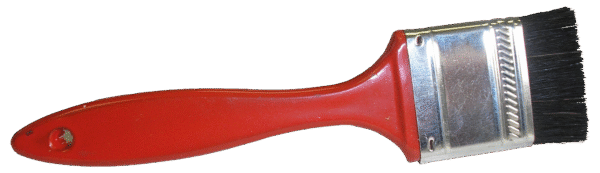
The Detail Paintbrush — Red 0.6″ Bristle is the solution. It is modeled after a quality artist’s paintbrush but built for professional automotive detailing: chemical-resistant ferrule, durable handle, and a 0.6-inch bristle head that is narrow enough to thread into the tightest spaces on a modern vehicle interior or exterior trim panel. It is the brush that professional detailers reach for when precision matters more than speed.
What This Brush Is
This is a 0.6-inch (approximately 5/8″) bristle-width detail brush in the paintbrush form factor. The red handle designation identifies it in a multi-brush kit alongside the companion black-handle brushes in the 3/4″ black bristle version. The narrow head and tapered bristle tip allow precise product application and agitation in spaces where wider brushes cannot go without touching adjacent surfaces.
Key Features and Why They Matter
- 0.6-inch narrow bristle head — the narrowest practical head size for most automotive crevice work. Fits into air vent louvers, seam channels, and emblem edges that larger brushes cannot reach.
- Paintbrush form factor — the elongated, fine-tipped head allows controlled placement of bristles in exactly the right spot. So what? You clean what you are aiming at without inadvertently brushing adjacent soft trim or coated surfaces.
- Chemical-resistant ferrule construction — stands up to regular exposure to interior cleaners, APC, leather conditioners, and water without losing bristle grip or handle integrity.
- Red handle color coding — color identification helps keep brushes organized in a kit. Grab the red for tight-space work, the black for slightly wider areas.
- Reusable and washable — rinse clean after use and the brush is ready for the next job. With proper care, these brushes outlast hundreds of detail sessions.
What This Brush Is NOT For
This brush is not for polishing, compound application, or any abrasive work on painted surfaces. It is a crevice cleaning and product-application brush — not a paint correction tool. Do not use dry on painted surfaces. Do not use with heavy-grit compounds or abrasive wheel cleaners on clear coat or polished trim — even soft bristles can marr clear coat under abrasive product pressure. Always use with an appropriate liquid product as a carrier.
Who Uses This Brush
Professional interior detailers, concours-level enthusiasts, ceramic coating preparers doing final panel inspection wipe-downs, and auto auction reconditioning technicians who need precision tools for high-end vehicles. If you are detailing a $150,000 German luxury SUV and need to get product residue out of the stitching groove on a nappa leather seat, this is the brush. Also widely used for exterior badge and emblem cleaning on prestige vehicles where the customer notices every detail. For a broader brush option, see the Detail Brush Set (3-piece).
How to Use
- Load the brush: Apply a small amount of interior cleaner, APC, or detail spray to the bristle head — not to the surface directly. Control over product placement is the advantage of this brush.
- Insert into the crevice or detail area: angle the bristle head to align with the channel, louver, or seam you are cleaning.
- Agitate with short, controlled strokes: work the product into the soil without pressing hard enough to splay the bristles against adjacent surfaces.
- Remove loosened soil: follow with a detailing swab, a folded microfiber corner, or compressed air to extract the loosened contamination from the crevice.
- Rinse and reshape: after use, rinse with water and gently reshape the bristle head. Store bristle-up or hanging to preserve the head shape.
Why Buy vs. a Cheap Paintbrush
A 50-cent hardware-store paintbrush may look similar but is built for a different job: applying paint to a wall, not precision detailing on a high-end vehicle interior. Hardware paintbrushes shed bristles under repeated chemical exposure, have ferrules that corrode and loosen bristle grip, and are built from natural bristle that absorbs product unevenly. This professional detail brush is built for repeated detailing chemical exposure, consistent bristle performance, and the precision placement that automotive detail work demands.
Frequently Asked Questions
What is the difference between the red 0.6″ and the black 3/4″ brush?
The primary difference is head width. The red 0.6″ brush is narrower — suited for the finest crevices like air vent fins, stitching grooves, and narrow trim channels. The black 3/4″ brush has a slightly wider head, making it more efficient on badge surrounds, jamb seams, and larger trim detail areas. Most professional detailers carry both for different tasks on the same vehicle.
Can I use this brush on leather seats?
Yes — this brush is well suited for agitating leather cleaner into perforated leather, stitching channels, and creased areas on leather seats and steering wheels. Use only with a gentle leather cleaner at appropriate dilution. Never scrub aggressively with any brush on leather — the goal is product placement and light agitation, not mechanical removal of soil through force.
Does this brush work with wheel cleaner on small wheel features?
Yes — for lug nut recesses, spoke edges, and center cap detail work, this narrow brush is effective at agitating wheel cleaner product into tight areas on alloy wheels. Keep it separate from your paint-safe interior brushes once it has been used for wheel work — brake dust contamination can transfer and damage interior surfaces.
How do I keep the bristles from fanning out over time?
After every use, rinse thoroughly and gently press the bristles back into their natural straight or slightly tapered shape before setting the brush down to dry. Avoid storing brushes resting on their heads — hang them or store them with handles down and bristles free. Periodic washing with gentle soap and water, followed by reshaping while wet, extends the life of the bristle head significantly.