
Adhesive residue left from removed stickers, expired parking permits, inspection stickers, window tint film corners, and dealer decals is one of those detail tasks that is straightforward with the right tool and frustrating without it. The wrong approach — a fingernail, a random flat scraper without proper blade geometry — either does not remove the residue, damages the surface, or requires so many passes with adhesive remover solvent that the surrounding area ends up saturated. A proper blade scraper with controlled reach and a grip designed for precision work makes adhesive removal a quick, clean step rather than a time-consuming battle.
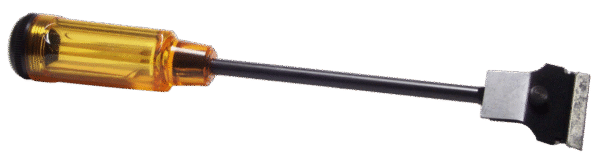
The Screwdriver-Style Long Reach Blade Scraper from Polishing Systems Inc is the right tool for this work. The screwdriver-format handle gives you controlled grip and rotational torque for precision blade work. The long reach puts the blade where you need it without having to compromise your body position in a vehicle interior.
What This Tool Is
A screwdriver-style handled long-reach blade scraper designed for precision adhesive removal, sticker residue lifting, window tint remnant removal, and bonded debris cleaning from glass, trim panels, and automotive interior hard surfaces. The screwdriver handle format provides a comfortable grip for controlled, precise blade work in tight interior areas.
Key Features and Why They Matter
- Screwdriver-style handle — the familiar screwdriver grip gives you full control over blade angle and pressure, which is more controllable than a flat-scraper handle for precision automotive adhesive removal work. Allows rotational torque for getting under stubborn adhesive edges.
- Long reach blade — accesses lower windshield sections, interior glass corners, and tight trim areas without requiring awkward body positioning or component disassembly.
- Precision blade construction — the blade is appropriately sized and profiled for automotive glass and trim scraping without the bulk that large floor-scraper blades would present in tight interior work areas.
What This Tool Is NOT For
Not for use on painted automotive exterior surfaces — a blade scraper on paint will scratch and damage clear coat. This is an interior glass and hard-surface trim tool. Do not use on soft vinyl, leather, or fabric interior surfaces where blade contact would cause irreparable damage. For exterior adhesive removal (bumper stickers, decals), use chemical adhesive removers with a soft plastic scraper rather than this metal-blade tool.
Who Uses This
Vehicle reconditioning specialists who regularly remove stickers, inspection labels, parking permits, and dealer decals from windows during used car preparation. Interior detail technicians who remove window tint film remnants and adhesive residue as part of tint removal jobs. Mobile detailers who include adhesive removal in their service scope for used car lot clients and private customers. Auto glass technicians who clean glass surfaces of adhesive residue before new tint application.
How to Use
- Soften adhesive first: Apply an adhesive remover or isopropyl alcohol to the adhesive area and allow 60 seconds dwell time before scraping. Softened adhesive releases cleanly; dry adhesive tends to shred and scatter.
- Angle the blade correctly: Keep the blade at a low angle (15-30 degrees) to the glass surface. High-angle blade contact concentrates force at the blade corner, which scratches glass and trim surfaces.
- Controlled, short strokes: Work in short, controlled forward strokes. Do not back-drag the blade across the surface — lift and reposition between strokes to avoid dragging adhesive residue back across clean areas.
- Clean the blade frequently: Adhesive accumulates on the blade quickly and reduces effectiveness. Wipe the blade clean between passes with a solvent-dampened cloth.
- Follow with adhesive remover wipe: After scraping, wipe the area with adhesive remover and a clean microfiber to remove any remaining residue and solvent.
Why a Purpose-Built Scraper vs. a Razor Blade
Bare razor blades work for glass scraping with proper technique — but the handle format is awkward, blade swaps are a safety hazard, and the short-reach format does not access tight interior glass areas. The screwdriver-style scraper provides safer, more controlled blade work in the specific contexts where automotive interior adhesive removal is required. Pair this tool with appropriate adhesive remover chemistry from the interior detailing products category.
Frequently Asked Questions
Will this tool scratch automotive glass?
Used at the correct low angle (15-30 degrees) on lubricated glass, a clean blade will not scratch automotive glass surfaces. Scratching occurs when the blade is used at a steep angle, when the glass is dry, or when debris is trapped between the blade and the glass. Always lubricate with adhesive remover before scraping and inspect the blade for chips or debris before use.
Can I use replacement blades in this scraper?
Contact Polishing Systems Inc to confirm blade replacement availability for this scraper model. Many screwdriver-style scrapers accept standard snap-off or replaceable blade inserts — confirm before purchasing if blade replacement is part of your intended use plan.
Is this tool appropriate for removing window tint film?
This tool assists with scraping adhesive residue left after window tint film has been removed — not for removing the tint film itself. Tint film removal typically uses a heat gun or steam, followed by adhesive residue cleaning where this blade scraper is useful.
What surfaces can this blade safely contact?
Appropriate for automotive glass (windshield, door glass, rear glass), hard plastic trim panels with smooth surfaces, and painted metal interior surfaces where light blade contact will not scratch (test first). Not for soft vinyl, fabric, leather, or any surface that would be damaged by blade contact.
How do I store the scraper to protect the blade?
Store with the blade retracted or protected by a blade guard if available. Unprotected blades in a tool bag or drawer contact other tools and surfaces, which dulls the cutting edge and creates a safety hazard when reaching into the storage area. A dedicated blade-tip cover or tool roll keeps the scraper ready for use and safely stored.