

Between the polishing step and the final protection coat, there is an often-skipped product category that separates a good detail from a great one: glaze. Not every vehicle needs heavy paint correction, but almost every vehicle shows fine swirl marks and a slightly flat look under direct light — especially on darker colors. A well-formulated glaze fills those micro-imperfections with optical fillers, adds depth, and creates the glossy three-dimensional look that makes paint appear wet even before the wax goes on.
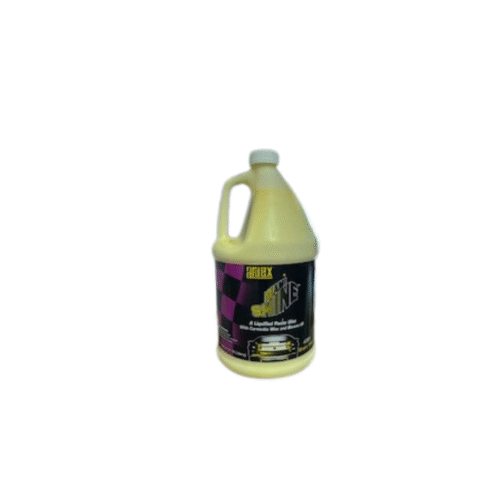
Phaze Glaze 1 Gallon is that product in a professional working volume. Designed for detail shops and experienced operators who include a glaze step as part of their standard finishing sequence — between the last polish pass and the protective coating application.
What Phaze Glaze Is
Phaze Glaze is an optical-filler glaze and paint conditioner. It uses fine filling agents to minimize the appearance of light surface scratches, swirl marks, and micro-marring, while optical enhancers boost perceived depth and clarity. It is not a compound, polish, or protective coating — it is a preparation and enhancement step between correction and protection. Browse the compounds and polishes category for the complete correction sequence.
Key Features and Why They Matter
- Optical-filler technology — fills fine swirl marks and surface imperfections at the micro level, making paint appear smoother and more reflective under direct light.
- Depth and clarity enhancement — boosts the three-dimensional gloss appearance of automotive paint, particularly on dark colors that show swirls most severely.
- Machine or hand applicable — use a foam pad on a DA polisher for full-vehicle speed, or apply by hand for spot work and smaller areas.
- Compatible with wax and sealant topcoats — designed to be topped with standard carnauba wax or polymer sealant. Verify compatibility before applying ceramic coatings over glaze.
- 1-gallon production volume — the professional working size for shops running glaze as a consistent step. Eliminates the per-job cost of retail-size containers.
What Phaze Glaze Is NOT For
Phaze Glaze is not a substitute for polishing or compounding. Optical fillers conceal fine defects but do not remove them from the paint — paint correction still requires abrasive chemistry. Glaze is also not designed as a base for ceramic coatings in most systems — always verify compatibility before applying ceramic over a glazed surface. Apply only over a clean, corrected, product-free paint surface.
Who Uses Phaze Glaze
Professional detail shops including a glaze step in premium detail packages, high-end car show enthusiasts wanting the deepest possible paint appearance before wax, and reconditioning shops preparing vehicles for sale. The 1-gallon size makes sense for any operation running more than 3–5 glaze applications per week.
How to Use
- Prep: Wash, clay, and correct the vehicle. Surface must be clean and product-free before glazing.
- Apply by machine or hand: Prime a soft foam finishing pad with a small amount of Phaze Glaze. For hand application, use a quality foam or microfiber applicator.
- Work in sections: Apply in overlapping passes, one panel at a time. Use light to moderate pressure — glaze does not need aggressive working.
- Allow to haze: Let glaze sit for 1–3 minutes until slightly hazed (temperature dependent).
- Buff off: Remove with a clean, soft microfiber using light pressure. Flip frequently to a clean section.
- Top with protection: Apply carnauba wax or polymer sealant after glazing to lock in gloss and provide lasting protection.
Why Include a Glaze Step vs. Going Straight to Wax
A wax applied directly to polished paint looks good. Phaze Glaze applied between polishing and the protective coat looks noticeably better on dark paint and high-gloss vehicles — the difference is visible in side-by-side comparisons. For detail shops offering a premium detail tier, the glaze step justifies a service price increase well above the product cost.
Frequently Asked Questions
Does Phaze Glaze provide any paint protection?
Phaze Glaze provides minimal long-term surface protection on its own. Its role is enhancement and surface filling, not protection. Always follow with a wax, sealant, or compatible protective coating to protect the surface. The glaze itself will last only until the first wash without a protective topcoat.
Can I apply Phaze Glaze with a DA polisher?
Yes. A soft foam finishing pad on a DA polisher at low speed (2–3 on most machines) is the most efficient application method for full-vehicle work. The machine ensures even coverage and reduces application time significantly compared to hand application on large vehicles.
Is Phaze Glaze compatible with ceramic coatings?
Most ceramic coatings require a bare, product-free paint surface and do not bond properly over glaze fillers. If your finishing workflow includes ceramic coating application, skip the glaze step or verify with the ceramic coating manufacturer that a glaze-treated surface is acceptable. For wax and polymer sealant topcoats, Phaze Glaze is generally fully compatible.
How often should I reapply Phaze Glaze?
Glaze is typically applied as part of a complete detail — wash, correct, glaze, protect — rather than as a routine maintenance product. Most professional operators re-glaze when they perform a full paint correction or seasonal detail. The interval depends on the protective topcoat used and the vehicle’s environmental exposure.
What is the shelf life of Phaze Glaze?
Stored with the cap sealed in a temperature-stable environment, Phaze Glaze maintains performance for 2–3 years. Avoid temperature extremes — freezing can disrupt the filler suspension. If the product thickens or separates, stir thoroughly before use and test on a small area before full application.