
Flat backing plates work well on flat panels. The moment you move to a hood with a sharp character line, a curved door, a fender radius, or any compound surface geometry, a rigid backing plate becomes a problem. The edge of the pad lifts off the surface or digs in, creating uneven compound distribution and, on rotary machines, the risk of edge burn on the high points of the curve. This is the specific problem an interface pad solves.
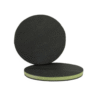
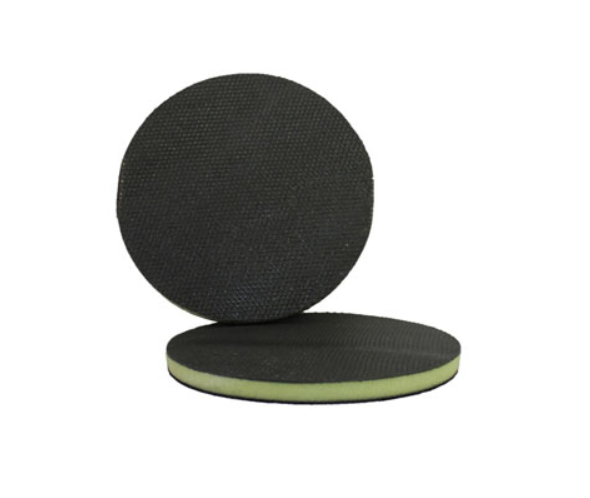
The Magna Shine 6″ Interface Pad is a foam cushion that installs between your backing plate and your polishing or finishing pad. It adds compliance to the pad stack — allowing the foam pad to flex and follow body contours rather than bridging across them. The result is more consistent pad contact across curved panels, better compound or polish distribution, and significantly reduced risk of burning paint on compound cuts near panel edges and curves.
What the Interface Pad Is
This is a foam spacer and flex layer — it is not a polishing pad and does not contact the paint directly. It attaches to the backing plate on one side (hook-and-loop), and the polishing pad attaches to it on the other side (also hook-and-loop). The foam compresses differentially under pressure, letting the outer edges of the polishing pad remain in consistent contact with curved surfaces instead of lifting off.
Key Features and Why They Matter
- Foam compliance layer — flexes with body panel curves instead of bridging across them. Means consistent compound and polish contact on doors, hoods, and fenders without chasing bright spots caused by uneven pad contact.
- Edge burn reduction — the foam absorbs some rotational force at the pad edge. On rotary polishers running heavy cut pads on curves, this is a meaningful safety margin against through-burn.
- Extends polishing pad life — more even pressure distribution means the pad wears consistently across its face instead of developing hot spots from edge loading.
- Hook-and-loop both sides — attaches to standard backing plates and accepts standard polishing pads without any modification to your existing polisher setup.
- 6-inch format — correct size for 5/8″-11 and 8mm dual-action and rotary polisher setups running 6-inch backing plates.
What This Is NOT For
An interface pad adds thickness and flex to your pad stack — which also reduces the effective cutting power of an aggressive compound pad. Do not use an interface pad when working on flat panels where you need maximum backing plate rigidity for efficient defect removal. On perfectly flat surfaces, a rigid backing plate transfers machine energy more efficiently to the pad. Interface pads are for curved geometry work, not a universal upgrade for all polishing situations.
Who Uses This
Experienced paint correction detailers who work on a variety of vehicle body styles use interface pads as a standard part of their pad setup kit. Body shops doing spot repairs on curved panels reach for the interface pad to prevent uneven polish distribution. Enthusiast detailers who have tried rotary polishing on curved hoods and ended up with uneven results — or, worse, an edge burn — find the interface pad resolves the problem immediately.
How to Use
- Remove your backing plate from the polisher or ensure it is the correct 6-inch size.
- Attach the interface pad to the backing plate via hook-and-loop — press firmly to seat the connection.
- Attach your polishing or finishing foam pad to the interface pad’s outer face via hook-and-loop.
- Proceed with normal polishing technique. You may need to increase machine speed slightly to compensate for the added flex layer absorbing some energy.
- Remove and clean the interface pad after use — rinse with water or compressed air, allow to dry fully before storage.
Why Buy Magna Shine vs. Generic Interface Pads
Cheap interface pads compress unevenly or too aggressively, which can cause their own form of uneven contact. Magna Shine’s foam density is chosen specifically for the flex vs. energy transfer balance that makes an interface pad useful — enough flex to conform to curves, enough firmness to still transmit machine energy to the polishing pad effectively. Browse the full exterior polishing accessories lineup to complete your pad and backing plate setup.
Frequently Asked Questions
Do I need a special backing plate for an interface pad?
No — the interface pad uses standard hook-and-loop attachment on both faces. It works with any standard 6-inch hook-and-loop backing plate. The interface pad itself is the intermediary; no modification to your existing equipment is needed.
Does using an interface pad reduce cutting power?
Yes, slightly — the foam layer absorbs some machine energy. This is the expected trade-off. On flat panels where maximum cutting efficiency is needed, use a rigid backing plate without an interface pad. On curved surfaces where edge contact and marring risk are the greater concern, the interface pad is worth the modest efficiency reduction.
What pad sizes work with the 6-inch interface pad?
6-inch polishing pads are the direct match. You can use 5.5-inch pads for a slightly recessed face profile. Do not use larger pads — they will overhang the backing plate and create uneven contact.
Can I use an interface pad with a rotary polisher?
Yes — interface pads are particularly valuable on rotary polishers where edge burn risk on curved panels is higher than on dual-action machines. The compliance layer helps distribute the higher rotational forces from a rotary more evenly across the pad face.
How do I clean and maintain the interface pad?
Rinse with clean water after use to remove compound and polish residue. Allow to air dry completely before storage. Inspect the hook-and-loop faces periodically — if the loops are worn or clogged, the pad connection will weaken. Store dry, away from direct heat.