Floor mats and carpet sections accumulate ground-in dirt, sand, and spilled liquid contamination that a basic wipe-down with a microfiber and spray cleaner will never fully address. Effective fabric cleaning requires mechanical agitation — working the cleaning chemistry into the fiber and loosening the contamination that has bonded to the fabric surface below the visible layer. Doing that by hand with a brush is time-consuming and physically demanding. A drill brush delivers consistent, high-speed agitation that covers the same area in a fraction of the manual time.
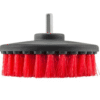
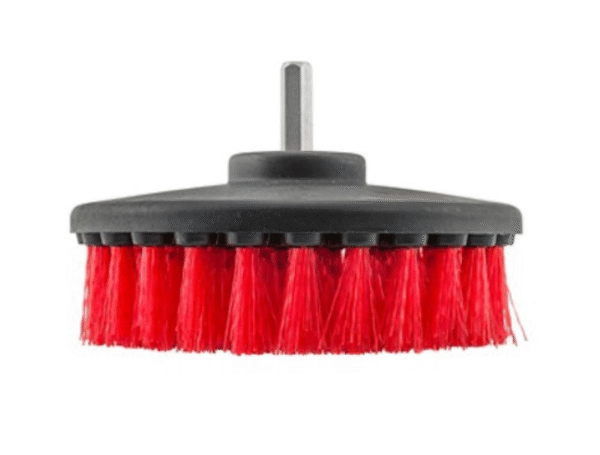
The Red Drill Brush is the medium-stiffness drill brush for that job. The red designation signals the middle tier of the drill brush stiffness range: stiff enough to agitate embedded dirt from carpet and fabric effectively, mild enough to avoid damaging fabric fibers or seat bolster materials that a stiff brush would fray or deform.
What This Is
This is a drill-mounted cleaning brush with a polypropylene bristle head in medium stiffness, identified by the standard industry red color coding. The brush mounts in a standard drill chuck via an arbor connection and rotates to provide mechanical agitation of cleaning products into carpet, fabric, rubber mats, and similar surfaces. The medium stiffness is appropriate for the range of fabric and mat cleaning common in automotive interior detailing work. For heavy-duty scrubbing of rubber floor mats and exterior surfaces, a stiffer brush (typically green or black) may be more effective. For delicate fabric upholstery and leather surfaces, a softer brush (typically white or blue) is appropriate.
Key Features and Why They Matter
- Medium stiffness bristles — the red color designation identifies this as the middle tier of drill brush stiffness. Provides real agitation for fabric and mat cleaning while remaining safe on most automotive interior fabric, carpet, and mat materials.
- Drill-mounted operation — the rotating drill action delivers consistent, high-speed mechanical agitation across the brush face. Significantly faster and more effective for fabric cleaning than manual brush scrubbing by hand.
- Polypropylene bristle construction — chemically resistant to APC, carpet shampoo, and other cleaning chemistry used in interior detailing. Does not soften, distort, or degrade from repeated exposure to cleaning products at working concentrations.
- Standard drill chuck compatibility — the arbor fits standard drill chucks. Most mobile detailers already have a variable-speed drill — no additional equipment purchase needed.
- Diameter suitable for interior carpet areas — sized for the mat, carpet, and seat fabric surfaces of vehicle interiors without being too large to maneuver in tight seating areas.
What This Is NOT For
The red medium-stiffness drill brush is not appropriate for painted vehicle surfaces, automotive glass, polished metal, or soft leather where the rotating bristles will cause surface damage. It is also not the correct choice for very delicate or aged fabric upholstery where the medium bristle may fray the fabric — for delicate fabric, use a soft-bristle drill brush. This brush is an interior cleaning tool for fabric, carpet, and rubber surfaces — not an exterior detailing tool.
Who Uses This
Professional interior detailers who use drill brushes as a standard tool for carpet and mat cleaning, mobile detailers doing full interior details who want to cover fabric surfaces thoroughly and efficiently without the fatigue of manual brushing, fleet maintenance operations cleaning commercial vehicle interiors with high-contamination carpet areas, and detail shop technicians handling the fabric agitation step in interior deep-clean services.
How to Use
- Apply carpet shampoo or APC to the area being cleaned. Allow 30–60 seconds of dwell time for heavily soiled areas before agitating.
- Attach the drill brush to a variable-speed drill and set to moderate speed — 300–800 RPM for most carpet and mat cleaning work.
- Agitate in overlapping passes across the carpet or mat section. The rotating brush will foam up the cleaning chemistry and work it into the fiber.
- Wipe or extract the agitated chemistry and lifted contamination with a microfiber towel or a wet/dry vac extraction. For best results, extract immediately after agitation before the contamination can redeposit.
- Repeat for heavily soiled areas — a second application and agitation pass on stubborn contamination is more effective than a single extended scrubbing pass.
Why a Drill Brush vs. Hand Scrubbing
Hand scrubbing a floor mat with a brush takes 2–4 minutes of physical effort per mat to achieve meaningful cleaning of ground-in contamination. A drill brush covers the same mat in 30–60 seconds at higher agitation speed and more consistent pressure than hand scrubbing can sustain. For an interior detail that includes 4 floor mats, a cargo area, and fabric seat sections, the drill brush saves 15–20 minutes of labor time and delivers better soil removal than hand scrubbing can practically achieve.
Frequently Asked Questions
What drill speed should I use with this brush?
300–800 RPM is the recommended working range for most carpet and fabric agitation work. Higher speeds increase agitation force — use higher speed for heavily soiled rubber mats, lower speed for fabric upholstery and delicate material. Variable-speed drills are ideal. Start at lower speed and adjust based on the material and soil level.
Is the red brush safe on car seats?
The red medium-stiffness brush can be used on fabric upholstery seats with care — use a lower drill speed and a light touch on seat fabric compared to floor mat work. For aged or delicate fabric, or for light-colored fabric where brush marks might be visible, test on an inconspicuous section before full application. For leather seats, do not use the red drill brush — use a soft brush at low speed or a dedicated leather cleaning brush.
What is the difference between the red, blue/white, and green/black drill brushes?
Drill brushes are color-coded by stiffness across most brands. White or blue = soft (for delicate surfaces, leather, lightly soiled fabric). Red = medium (for carpet, mats, moderately soiled fabric). Green or black = stiff (for rubber mats, engine bays, heavy exterior soiling). Use the stiffness appropriate for the surface and soil level being treated.
Can I use the red drill brush for engine bay cleaning?
Engine bay cleaning typically requires a stiffer brush — a red medium-stiffness brush will work on lighter engine bay soiling at the accessible surface level, but heavily greased and contaminated engine bay surfaces respond better to a stiff-bristle green or black drill brush. Verify that the drill brush and your drill are rated for the solvent content of your engine degreaser if using non-water-based engine cleaning chemistry.
How do I clean the drill brush after use?
Rinse under running water immediately after use, spinning the brush in clean water to flush embedded product and contamination from the bristles. For thorough cleaning, apply a small amount of dish soap to the bristles, spin in water, and rinse until the output runs clear. Allow to air dry before storing to prevent mold growth in embedded moisture.